




By Wesley Edmonds, Director of Workplace, OFS
Flex work, the simple idea that people can choose how and where they work (whether that’s at a traditional workplace, a coworking spot or a neighborhood coffee shop with good music and cozy lounge chairs), has officially passed any experimental phase and is now a reflection of how people choose to both work and live.
And as flexible offices and coworking spaces continue to evolve, I’ve noticed something important: the conversation is getting less obsessed with the space itself and more focused on what the space does for people once they arrive.
Not just where people work, but whether the environment helps them settle in, focus, connect, and feel like themselves.
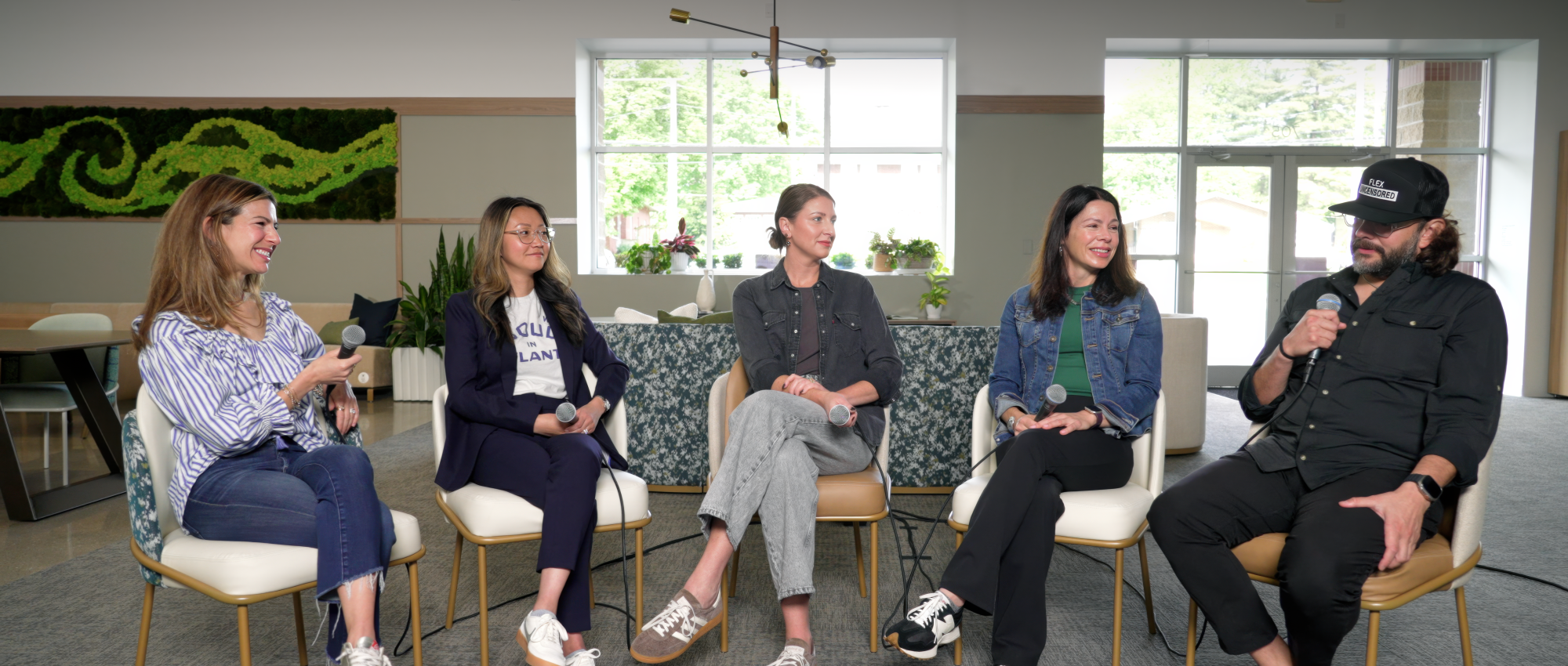
I sat down with four leaders deeply embedded in the coworking and flex workspace world. Together, we explored what’s changing, what’s sticking, and what’s actually driving the future of workplace experience.
Voices shaping the future of coworking and flex offices
Joining the conversation were:
- Kayla Gottschalk, Switchyards
- Meagan Slavin, 25N Coworking
- Jamie Russo, Everything Coworking
- Giovanni Palavicini, Executive Director of the Global Workspace Association and President of Fronteras Commercial Real Estate
Each guest brought a different perspective. Operations, strategy, research, and real estate. But what made the conversation valuable was how real it was, packed with the kind of insight you only get from being in it every day.
Why people join is practical, not romantic
Coworking gets talked about as community-driven, and yes, community matters. But the panel made a point that’s easy to forget: most people join because they need a place to get work done.
Meagan Slavin said it plainly, the decision to join a space usually starts with practicality:
“Our members walk in because they need a meeting room, an office, or a desk. They come to us because we’re close to where they live, we’re priced correctly, and the design fits their needs.”
That’s a real design and strategy takeaway: the first job of a flex space is usefulness. If the basics don’t work, if the layout is inconvenient, the seating is uncomfortable, the lighting is harsh, or the acoustics fight you, community won’t save it. People won’t stay long enough to build relationships if they’re frustrated from day one.
So before we talk about vibe or culture, we have to start here:
Good flex space design removes friction first, then layers in connection.
Once a space works functionally, how it feels to come back to, starts to matter even more. People don’t commit to a space long-term because it has “amenities.” They commit because it becomes part of their routine, and part of their identity as a worker.
Meagan framed it well: in many cases, community becomes the glue that keeps members for years, even if it’s not the first reason they join. And that’s where a lot of flex spaces either level up, or plateau.
Human-centered design led by instinct
Throughout the discussion, we kept coming back to what strong coworking environments prioritize:
- Atmosphere over automation
- Hospitality over hierarchy
- Comfort over rigid structure
What I found most interesting here is that these aren’t “design preferences.” They’re signals.
They signal to people: You belong here. You don’t have to perform. You can just work.
And whether we’re talking coworking, flex space, or enterprise offsites, people decide quickly whether a space supports them, or asks them to adapt to it.
Kayla Gottschalk shared that at Switchyards, design decisions often come back to one simple filter:
“Would we want to work here ourselves?”
How enterprise strategy is influencing flex office trends
Another shift we explored is the growing influence of enterprise organizations in the flex spaces.
Now, many larger organizations are using flex intentionally as part of employee experience, because it solves problems traditional workplaces are still struggling to address:
- Proximity and commute
- Hybrid inconsistency
- Uneven needs across teams
- The demand for autonomy
In other words, flex isn’t competing with the traditional office anymore. It’s becoming part of a broader workplace ecosystem, one that gives people more choice, better proximity, and a sense of control. Because in today’s world, people aren’t just looking for a place to work. They’re looking for a place that works for them.
Flexibility isn’t optional anymore
If there was one statement everyone circled back to, it was this: flexibility is now the baseline expectation.
People want the ability to choose where they work based on the kind of day they’re having, not just the rules of a policy. Sometimes that means they need collaboration. Sometimes that means they need privacy.
They’re gravitating toward environments that respect individuality, wellbeing, and different work styles. Flex work isn’t only about location. It’s about fit.
The real evolution: Designing for belonging
If I had to sum up what this conversation reinforced, it’s this: the future of flex work isn’t being shaped by floor plans or feature lists.
It’s being shaped by people, how they feel, how they connect, and what helps them do their best work. And when people have more options than ever before, the spaces that win aren’t just “nice.” They’re intentional.
They understand why people arrive, what makes them return, and what keeps them around when work gets complicated and life gets full. That’s where the real evolution is happening.
Watch the full conversation
This episode of Imagine a Place offers a candid, grounded look at how coworking, workplace design, and flex office culture are changing, through the voices of leaders building and studying these spaces every day.
Watch the full conversation below and hear directly from me, Kayla, Meagan, Jamie, and Giovanni as we unpack the future of flex work and the human experiences shaping it.
Listen to the Imagine a Place episode featuring Mara Hauser, Founder and CEO of 25N Coworking and Founding Principal of Workplace Studio, as we explore leadership, design, and the evolving workplace experience.